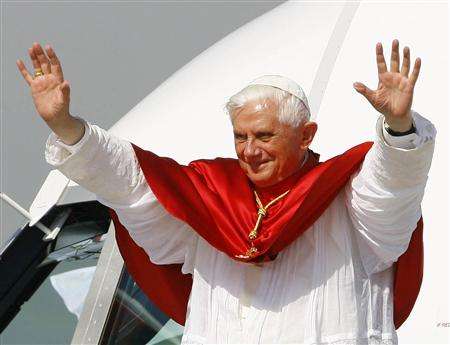
Saturday, 27 August 2011

XXII SUNDAY, year A: Mt 16:21-27


Behind me, Satan
The harsh words used by Jesus in his reproach to Peter show how far he was from Jesus’ ideals and plans. The scene is even more striking, if we remember that just a few moments before Peter had been praised for his profession of faith and had been promised a position of leadership in Jesus’ community.
The outspoken Peter, who never wasted time expressing his feelings and voicing out his thoughts, had proclaimed that Jesus is the Messiah and the Son of the living God. Although Jesus accepted his statement, he told Peter that he could not make such an affirmation out of his own mind, but for a revelation from the Father.
However, there was a big misunderstanding on Peter’s side, because Jesus was not a Messiah according to his expectations. Peter with the Apostles, the disciples at large and all the people of Israel were expecting a triumphant Messiah, full of power and glory, who would destroy all the enemies with the stroke of his hand. With him, the people of Israel would rise in glory and power and rule the world in God’s name. They dreamt of an imperial figure of the Messiah, in the style of the roman emperor, only with far greater glory and power.
If we look attentively, Peter’s ideal was not different from the proposal made to Jesus by Satan in the desert, when he promised to make Jesus the king of kings of this world. And Jesus did with Peter what he had done with Satan: he gave him a sharp and swift refusal. “Get behind me, Satan” – he said. Jesus did not expel or exclude Peter, but he reminded him of who was in charge. If he wanted to be a disciple, Peter had to follow Jesus behind. Jesus is the way, and he is the one who sets the standard, not the other way around. Jesus knew that to carry out his mission with faithfulness, he had to pass through rejection and suffering. He had not come to rule or to oppress, but to serve and to save.

XXII SUNDAY, year A: Ro 12:1-2


WITH A NEW MIND
In Ro 12:1-2, Paul speaks about true worship: we must worship him in a way that befits us, and the only way worthy of thinking beings is to offer “our living bodies” to God, which means to offer ourselves: our minds, our hearts and our bodies. The Revised Standard Version translates: “present your bodies as a living sacrifice, holy and acceptable to God.
In our culture, there is a culture of the body, which looks for satisfaction and pleasure as supreme values. In the Bible, be it in the OT or in the NT, we can find as well the importance of the body, in such way that there is no true salvation without the body sharing in that salvation. In the end, we are not human beings without a body; and Jesus came to save human beings. That’s why resurrection is part of the mystery of salvation. The only sacrifice that God accepts from us is the sacrifice of ourselves in communion with the sacrifice of Christ. As must offer ourselves to him, we must offer our bodies as well, because they belong to him.
We should not allow ourselves to be guided by the behaviour of the world aroundus. We must be guided by a new way of thinking and a new vision of the world, the one that we receive from Christ. We cannot argue that everybody does it, so we can do it as well. Everybody steals; why should we not steal? Everybody profits from his position; why we not do the same? Everybody bribes or receives bribes; why should we not behave in the same way? Everybody has an affair and betrays his/ her spouse; so what is wrong with that? If everybody does, I can do it as well. As followers of Jesus Christ, we must think and behave like Jesus Christ. With the mind of Christ, we can know what is good and honourable and we can discover “the will of God”.

Friday, 26 August 2011

With my friend, Fr. Horácio


Church built by Fr. Horácio
with the people of Kawama, Chililabombwe
This week, I have been with my sister Sabina in Queimada (which means burnt), a small Parish near the river Douro area. The landscape is full of vineyards and apple tree plantations. It is time to pick up the apples and one can see the passing trucks full of apple boxes. Very soon, the vintage will start as well.
Yesterday, I spent some time together with Fr. Horácio, who came to see me. We worked together in Chililabombwe. He was in charge of Konkola Parish, with all the outstations. With his motorbike, he would go everywhere, spending time with people. In Kawama, which was a poor compound near Chililabombwe, he was able to motivate people and working with them he built a church that is like a cathedral. It always surprised me the way he motivated the people, so that they got involved and contributed with their work, being able to put up a big structure with very little money. He was always in the forefront, being the first to climb up the scaffolds and to hold the hammer or the trowel.
With him, I learnt that one must always be present and involved if he wants people to get involved as well. How can people believe in a project if they don’t see you believing in it? That is the big problem with most of our leaders, mainly political leaders: they stay away from people, being aloof and disinterested in the situation of the people or even in the projects that they themselves started. Will the ones that present themselves to election be different? If they were not up to now, they will not be in the future as well.

Tuesday, 23 August 2011

SHARE YOUR FAITH


The words of the Pope during the World Youth Day still reverberate with emotion. He didn’t speak a lot, and his addresses were always short. In spite of that, he touched the core of the Christian message and touched the hearts and minds of many young people, who welcomed him and with him gave witness to Jesus Christ.
I just want to point out some of the main themes, which the Pope referred to:

·      The search for truth and love

“Dear young people, do not be satisfied with anything less than Truth and Love, do not be content with anything less than Christ.” (Vigil address)

·      God’s great love

“Yes, dear friends, God loves us. This is the great truth of our life; it is what makes everything else meaningful. We are not the product of blind chance or absurdity; instead our life originates as part of a loving plan of God.” (Vigil address)

·      The universal significance of Christ, the Saviour

“We need to speak with courage and humility of the universal significance of Christ as the Saviour of humanity and the source of hope for our lives.” (Vigil address)
“Make Christ, the Son of God, the centre of your life.” (Mass address)

·      THE CROSS OF JESUS CHRIST

o   God’s true wisdom
“The mystery of Christ’s glorious Cross, wherein is found God’s true wisdom which judges the world and judges those who consider themselves wise (cf. 1 Cor 1:17-19).
o   Christ’s love
“Christ loved me and gave himself for me” (Gal 2:20). In the face of such disinterested love, we find ourselves asking, filled with wonder and gratitude: What can we do for him? What response shall we give him?”
o   We must carry the sufferings of the world
“Saint John puts it succinctly: “By this we know love, that he laid down his life for us; and we ought to lay down our lives for the brethren” (1 Jn 3:16). Christ’s passion urges us to take upon our own shoulders the sufferings of the world”.
o   The cross is not a sign of failure
“The Cross was not a sign of failure, but an expression of self-giving in love that extends even to the supreme sacrifice of one’s life. (…) The Cross, by its shape and its meaning, represents this love of both the Father and the Son for men.”(Address in the Way of the Cross)

·      Keep alive the friendship with Jesus

“Dear young people, if you wish to discover and to live faithfully the form of life to which the Lord is calling each of you, you must remain in his love as his friends. And how do we preserve friendship except through frequent contact, conversation, being together in good times and bad? Saint Teresa of Jesus used to say that prayer is just such “friendly contact, often spending time alone with the one who we know loves us” (cf. Autobiography, 8).
And so I now ask you to “abide” in the adoration of Christ, truly present in the Eucharist.” (Vigil address)

·      In communion with the Church

“But let me also remind you that following Jesus in faith means walking at his side in the communion of the Church. We cannot follow Jesus on our own. Anyone who would be tempted to do so “on his own”, or to approach the life of faith with kind of individualism so prevalent today, will risk never truly encountering Jesus, or will end up following a counterfeit Jesus.” (Mass address)

·      Participate in the life of your parishes

“Growing in friendship with Christ necessarily means recognizing the importance of joyful participation in the life of your parishes, communities and movements, as well as the celebration of Sunday Mass, frequent reception of the sacrament of Reconciliation, and the cultivation of personal prayer and meditation on God’s word.” (Mass address)

·      Faith – a personal relationship with Jesus

“Faith does not simply provide information about who Christ is; rather, it entails a personal relationship with Christ, a surrender of our whole person, with all our understanding, will and feelings, to God’s self-revelation.” (Mass address)

·      Bear witness! Share your faith

“Friendship with Jesus will also lead you to bear witness to the faith wherever you are, even when it meets with rejection or indifference. We cannot encounter Christ and not want to make him known to others. So do not keep Christ to yourselves! Share with others the joy of your faith. The world needs the witness of your faith, it surely needs God.” (Mass address)

Monday, 22 August 2011

THE GROWING TREES ARE THE FOREST


Imiti ikula, e mpanga (the growing trees are the forest) is a Bemba (from Zambia) proverb that is repeated time and again, when people speak about the youth. It means that young people are the future and that they deserve attention and care. The proverb indicates an attitude of hope and expectancy. And that is the attitude Pope Benedict presented during the just ended World Youth Day, in Madrid.
Old people like to look backwards and see the past as the golden age, when everything was good, in contrast with the present, in which plenty of problems bother us. The present is always the difficult time, because that is the time we live in, the time in which we have to make difficult decisions and bear the consequences of those decisions.
The youth cannot remember the past, because they were not there yet. They feel the pain of the present and turn themselves to the future. They want a better world and dream about it. However, many people feel them as threat to society, due to their rejection of the present. And this is made worse by the fact that a good number of young people only see ahead of them a hopeless future, full of darkness, leaving them in despair; and in their despair, they use their energy in a destructive way, causing havoc in the community, as we saw in the recent past.
Instead of blaming the youth, we should ask ourselves what kind of society we have been building, to cause so deep rejection, revealed in acts of vandalism. What do we have to offer them?
The World Youth Day showed a very different youth. They participated and they celebrated with joy. There were no disorders and no violence. There was rejoicing in peace, there was sharing, and there was prayer. The youth that went to Madrid live in the same world and face the same problems as all the other youths, but they were illumined by the light of Christ, which gives them guidance, strength and hope.
I watched with emotion the Way of the Cross, being webcasted alive; and I heard and read the words of the Pope, which were words full of hope, giving guidance to search for truth and love, and calling for witnessing and sharing of the faith, a faith that is a total commitment to Jesus Christ.
During the vigil, Pope Benedict told the youth:
Dear young people, do not be satisfied with anything less than Truth and Love, do not be content with anything less than Christ.”

Friday, 19 August 2011

XXI SUNDAY, year A Matthew 16:13-20


A FUNDAMENTAL QUESTION: Who am I for you?
The question Jesus asked the Apostles is the question he is still asking each one of us.
People have the most varied opinions about Jesus, because Jesus is talked about as much today as in his own time, and he causes the same emotional and sometimes violent reaction. There are people who are ready to use all means in order to fight him and wipe out his name from the face of the earth. Once we meet Jesus, we cannot remain indifferent anymore; we must choose sides. However, there were plenty of people who respected Jesus and appreciated his teaching, but were not ready to be his followers or become his disciples. That’s why Jesus asked this fundamental question: Who am I for you? What do you say about me?
To answer Jesus’ question we must have a personal knowledge of him, and more than that we must live in a personal relationship with him. It is not enough to give the answers we learnt in the catechism, when they are just memorised words without any impact in our lives.
Peter answered for all the other apostles, and his answer is the answer of the Christian community. Peter’s answer was a profession of faith and it is our profession of faith, a profession of faith that we find throughout the Gospels, from beginning to end. Jesus is the Christ, the Son of the living God. In the gospel of John, the same profession of faith was made by Martha: “I believe that you are the Christ, the Son of God, he who is coming into the world.” (Jo 11:27). In a way, Martha added something to Peter’s proclamation: he is the Son of God who came into the world, to bring life and salvation.
To come to the acceptance of Jesus as the Son of God and as Saviour of the world, we need the guidance of the Holy Spirit, or as Jesus told Peter: You don’t know this on your own, and you didn’t find it by your studies and researches, be it philosophical or scientific.  This knowledge and inner certitude comes from the Father revealing it to us.
This belief changes us from within, as Jesus becomes the centre of our lives. That’s why we must sing the praises of God's glory: To him be glory forever”! (Ro 11:36).

POPE’S ADDRESS AT HIS ARRIVAL IN MADRID


“I have come here to meet thousands of young people from all over the world, Catholics committed to Christ searching for the truth that will give real meaning to their existence. I come as the Successor of Peter, to confirm them all in the faith, with days of intense pastoral activity, proclaiming that Jesus Christ is the way, the truth and the life; to motivate the commitment to build up the Kingdom of God in the world among us; to exhort young people to know Christ personally as a friend and so, rooted in his person, to become faithful followers and valiant witnesses.
Why has this multitude of young people come to Madrid? While they themselves should give the reply, it may be supposed that they wish to hear the word of God, as the motto for this World Youth Day proposed to them, in such a way that, rooted and built upon Christ, they may manifest the strength of their faith.
Many of them have heard the voice of God, perhaps only as a little whisper, which has led them to search for him more diligently and to share with others the experience of the force which he has in their lives. The discovery of the living God inspires young people and opens their eyes to the challenges of the world in which they live, with its possibilities and limitations. They see the prevailing superficiality, consumerism and hedonism, the widespread banalization of sexuality, the lack of solidarity, the corruption. They know that, without God, it would be hard to confront these challenges and to be truly happy, and thus pouring out their enthusiasm in the attainment of an authentic life. But, with God beside them, they will possess light to walk by and reasons to hope, unrestrained before their highest ideals, which will motivate their generous commitment to build a society where human dignity and true brotherhood are respected. Here on this Day, they have a special opportunity to gather together their aspirations, to share the richness of their cultures and experiences, motivate each other along a journey of faith and life, in which some think they are alone or ignored in their daily existence. But they are not alone. Many people of the same age have the same aspirations and, entrusting themselves completely to Christ, know that they really have a future before them and are not afraid of the decisive commitments which fulfill their entire lives. That is why it gives me great joy to listen to them, pray with them and celebrate the Eucharist with them. World Youth Day brings us a message of hope like a pure and youthful breeze, with rejuvenating scents which fill us with confidence before the future of the Church and the world.
Of course, there is no lack of difficulties. There are tensions and ongoing conflicts all over the world, even to the shedding of blood. Justice and the unique value of the human person are easily surrendered to selfish, material and ideological interests. Nature and the environment, created by God with so much love, are not respected. Moreover, many young people look worriedly to the future, as they search for work, or because they have lost their job or because the one they have is precarious or uncertain. There are others who need help either to avoid drugs or to recover from their use. There are even some who, because of their faith in Christ, suffer discrimination which leads to contempt and persecution, open or hidden, which they endure in various regions and countries. They are harassed to give him up, depriving them of the signs of his presence in public life, not allowing even the mention of his holy name. But, with all my heart, I say again to you young people: let nothing and no one take away your peace; do not be ashamed of the Lord. He did not spare himself in becoming one like us and in experiencing our anguish so as to lift it up to God, and in this way he saved us.
In this regard, the young followers of Jesus must be aided to remain firm in the faith and to embrace the beautiful adventure of proclaiming it and witnessing to it openly with their lives. A witness that is courageous and full of love for their brothers and sisters, resolute and at the same time prudent, without hiding its Christian identity, living together with other legitimate choices in a spirit of respect while at the same time demanding due respect for one’s own choices.”