Saturday, 28 July 2018

TO SHARE WITH THANKSGIVING

XVII SUNDAY IN ORDINARY TIME - John 6:1-15
The experience of starvation is very old. In old and modern times, there have been periods of scarcity, during which whole regions suffer from famine. The Scriptures present the experience of Jacob and his family. Several times, they made the long journey to Egypt in order to get some supplies of food and, then, in order to survive, they went to live there as economic migrants. During their wandering through the desert, the people of Israel suffered from lack of food, leading them to revolt against Moses. And they would rather go back to slavery in Egypt than suffer from famine. God found a way out of that suffering, providing them with manna from heaven. Throughout the history of salvation, God revealed himself as the Provider. And many peoples of the world have made that experience as well. In Bemba culture, one of the titles attributed to God is Mwansa Bamba, that is Master Hunter, who brings plenty of food and keeps his household well fed.
Among the prophets, we have the extraordinary story of Elisha, who asked a man to share the food he had, which was enough to feed a big number, still leaving a surplus. In the gospels, we find Jesus doing something similar. Far away from their homes, a big crowd of people were following Jesus, and he had pity on them. A young boy had some bread and a little fish. And from that little food shared out in an attitude of thanksgiving, enough food was found to feed the crowd. In Bemba, people say: Ificepa, fyakufwala; ifyakulya taficepa. Clothes may be short, but food does not fall short. Even little, it can be shared. This attitude of sharing is very important. The food produced in the world is enough for the whole population, but a few overeat and throw away any leftover. In some places, there is overproduction, and then what cannot be sold is disposed of or allowed to rotten, leaving countless numbers of people in a precarious situation. And besides agricultural products, sold at affordable prices, we must share as well the technologies which make possible to increase production. We live in a world of plenty, plagued by obesity in a growing number of countries. The body succumbs to the weight of gluttony, and the soul becomes the prisoner of an unbridled desire for self-satisfaction.

We must pay attention to what Jesus did: He "took the loaves, gave thanks, and distributed them." The sharing of the bread was done in thanksgiving. He would do the same in the Last Supper, for us to learn that communion is only possible when there is sharing. With Christ let us learn to share in thanksgiving.

Saturday, 21 July 2018

THE KIND OF LEADERS WE NEED

XVI SUNDAY IN ORDINARY TIME - Jeremiah 23:1-6
Since long ago, the figure of the shepherd has been used as a model for the leaders and rulers of the people, be it religious or political. And so Jeremiah’s criticism against the shepherds is a criticism of the leaders of the people.  A true shepherd, who is in charge of his flock, must take good care of the sheep, leading them to good pastures and refreshing waters. He must keep them healthy and well-fed, without suffering from the fierce heat of the sun or from heavy thunderstorms. In dangerous times, he must lead them to the sheepfold and provide them with food. While in the open countryside, he must keep them together, being attentive to the stray one, so that she does not get lost. And he must protect the flock from the fierce animals that are always lurking in the shadows to catch and kill the sheep. The shepherd’s life must be at the service of the sheep. However, the rulers of Israel are only concerned with their personal welfare; they do not care for the well-being of their people. They abandon them and they remain on their own, disperse and defenceless. Worse still, feeling trumped upon and oppressed, the sheep get scattered. Those leaders lived off the people. And so God will call them to account and take their positions from them and then He himself will take care of his people and choose shepherds according to his heart, who will “practise honesty and integrity in the land”.

In this Sunday’s gospel, we see Jesus as the one who came to fulfil that promise and to be that shepherd who takes good care of his people. And this is made clear with two incidents: first, Jesus cares for his disciples and sees that they have time for rest and for reflection; second, seeing the crowds coming to him, he realises that they “were like sheep without a shepherd”, scattered and lost, without anybody to gather them and give them direction. And Jesus, having “pity on them”, “set himself to teach them at some length.”

Saturday, 14 July 2018

GOD’S PROJECT FOR HUMANKIND

XV SUNDAY IN ORDINARY TIME - Ephesians 1:3-14
Nowadays, there are many people who despise God. For many, God either does not exist or, if he exists, he is a malevolent God who is intent on destroying our happiness and destroying our freedom. Others still proclaim that God is dead. Indeed, if God is a malevolent God, we do not need him. However, without God, we are left to our own self-destruction. Human beings have proved themselves to be the most violent of all creatures. Moved by pride, with an insatiable thirst for power, they are ready to crush any defiance or opposition. The death of God would mean the death of humankind, and we are the ones who will bring that death upon ourselves. If we try to be gods, we will be laughable gods, dominated by a destructive instinct. Instead of gods, they transform themselves into devils.

The Bible presents us with a different picture of God and of his relationship with human beings. In a process of revelation, which unfolds little by little, as the history of the people of Israel moves forward, God presents himself as a loving and caring God, who has a project for the people. In this Sunday’s liturgy, we are presented with a passage from the letter to the Ephesians that explicitly puts forward God’s project for humankind. God's plan is to “bring everything together under Christ, as head”, since he is the one who has redeemed and reconciled us. God’s project is a project of love, compassion and mercy, made present to us in Jesus Christ. Through Him, we become the adopted children of God. And since we are children, we are also heirs. And all this happens through Jesus Christ. Being the children of God, we are called to be holy, because he is holy (Lev 19:2). It was in Christ that God chose us “before the foundation of the world to be holy and blameless before him in love" (Eph 1: 4). And for this to become a reality, God "blessed us in Christ with every spiritual blessing in the heavenly places” (Eph 1:3).  "So that we, who were the first to set our hope on Christ, might live for the praise of his glory” (Eph 1:12).
Let us give thanks to the Lord, singing his glories, because of the greatness of his love

Saturday, 7 July 2018

PREJUDICE IS A FORM OF BLINDNESS

XIV SUNDAY IN ORDINARY TIME -  Mark 6:1-6
Jesus went to Nazareth, his hometown, and, on the Sabbath day, he went to the synagogue with his disciples. The synagogue was the house of the assembly, a house of prayer and a gathering place. Like all Jews, Jesus used to take part in the Sabbath worship at the synagogue. There, they used to read from the Scriptures and then somebody would give a commentary on the texts read. There would be time for prayer and for singing, as well. This synagogal tradition passed into the Christian liturgy, constituting the first part of the Mass - the celebration of the word. Jesus’ example should help us to realise the importance of the Day of the Lord, which is as well the Day of the Community. We need to set apart a special time for God and for the community. However, nowadays, we have ignored and despised the importance of the day of worship. Shopping malls and supermarkets are open, and people do their usual daily business. There is time for everything, except for God, for the family and for one another.

As we read this Sunday’s gospel, we discover that Jesus’ visit to Nazareth was not a pacific one. Even though surprised by his speech, they rejected him, because of their prejudice against him. Indeed, Jesus was a victim of prejudice. When informed by Philip about Jesus from Nazareth, Nathanael gave voice to his suspicion, saying: “Can anything good come out of Nazareth?” (John 1:46). And, in a kind of joke, the nickname of Nazarene was placed on the cross. At Nazareth, no one listened to him,  convinced as they were that they knew him: he was the carpenter and his family was well known. Prejudice leaves us blind, unable to see the goodness and truth of the other. Full of prejudice, we end up demonising the other, considering him a threat because he is different from us: from another race, another tribe, another people, another religion, another ideology or political grouping. And we reject him because he does not fit into our categories. We become incapable of recognising in the other the same humanity that is in us and we consider him incapable of contributing to the common good. We judge the other without knowing him and become unjust in our judgment. Nowadays, in the name of the so considered correct, we turn many prejudices into absolute and indisputable truths that are imposed as the only possible alternative. We must see the other, with his differences, as a challenge and not as a threat. The other is a challenge that leads us to a renewed effort of growth and solidarity.

Friday, 29 June 2018

ALL THOSE WHO SUFFER DESERVE OUR COMPASSION AND OUR CARE

XIII SUNDAY IN ORDINARY TIME - Mark 5:21-43
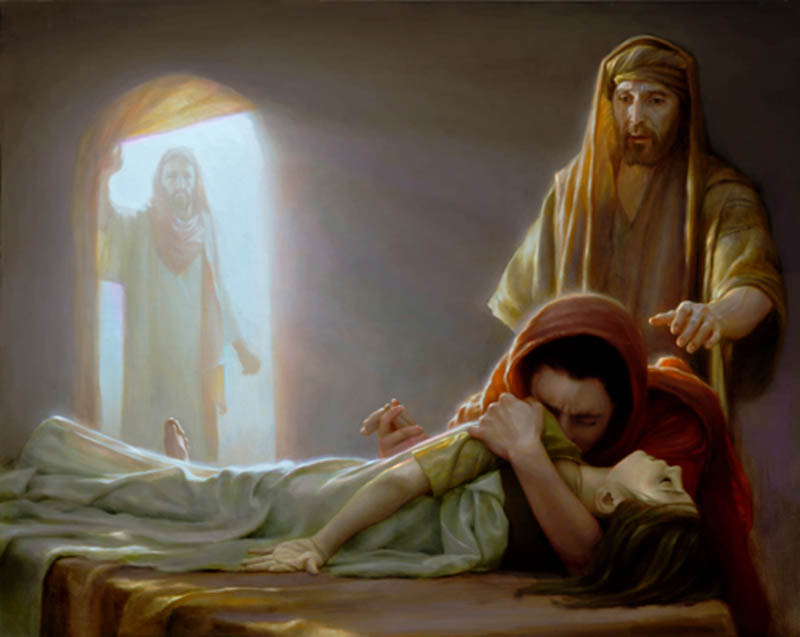
Humanity has never accepted death as being the natural outcome of our stay here on earth. Within us, there is an intense and deep longing for life to the full. Throughout the ages, all civilisations have tried to deal with death in different ways, always trying to come to terms with it. In the book of Genesis, death is presented as a consequence of man’s disobedience and revolt against God, the source of life. Reflecting on death’s cause, the book of Wisdom accuses the devil of bringing death into the world, due to his envy: “God did make man imperishable, he made him in the image of his own nature; it was the devil’s envy that brought death into the world” (Wis 2:23-24). Looking to God himself, the book of Wisdom tells us that “death was not God’s doing, he takes no pleasure in the extinction of the living” (Wis 1:13). Death is understood as something evil, which comes from the evil one. If we entrust ourselves to God, he will transform our death into life.
If we look at ourselves within the whole creation, we discover that human beings join everything else that is created in falling short of perfection and completion. We are not divine and by ourselves, we are limited, weak and fragile. As humans, our condition is to be mortal. Being created, we live our lives in a body that grows old and will end up in decay. We may try to delay that process, but we are unable to stop it. This earthly life, like all creation, is a gift of God’s love. However, having created human beings in his likeness, God has for us a plan of eternal life, which only can be carried out, in communion with Jesus Christ, since he is resurrection and life.
This earthly life is hard and painful; suffering seems to be always by our side. This Sunday’s gospel presents Jesus allowing himself to be touched by the suffering of ours. It is the suffering of Jairus, the father whose little girl is dying. She represents a suffering difficult to understand and to accept: the suffering of the little ones who have not had time yet to do evil. In such cases, we question God, unable to find an answer. Why do such ones suffer? Jesus felt the pain of that family and forgot everything else in order to go and attend to their plight. And by doing so, he reaffirmed God’s promise of Life. 
Mixed with the story of Jairus’ daughter, we are presented with the story of that woman who suffered for many years from a painful and debilitating condition. There are so many people in the same situation! To live with such limitations is a difficult learning process because we never get used to pain and to suffering. There are many situations in which the patients, like that woman, live in hiding, ashamed of being known or seen by others. That’s why Jesus brought her into the open, for all of us to realise that there are no shameful sicknesses and that all deserve our compassion and our care.
“Hear, O Lord, and be gracious to me!
O Lord, be my helper!” (Ps 30:10)

Saturday, 23 June 2018

I THANK YOU FOR THE WONDER OF MY BEING

SOLEMNITY OF ST. JOHN THE BAPTIST - Psalm 139:1-3,13-15
With the Psalm 139, we sing the praises of the Lord, realising how wonderful his works are. It is enough to have a quick look at everything that surrounds us to be filled with awe. In the dark of the night, lifting our eyes to the glittering stars, we feel lost in the immensity of the universe. Indeed,
“When I look at your heavens, the work of your fingers,
the moon and the stars that you have established;
what are human beings that you are mindful of them,
mortals that you care for them?” (Ps 8:3-4)
However, the wonder which fills our hearts and minds becomes even bigger, when we look at ourselves:
“Yet you have made them a little lower than God,
and crowned them with glory and honour” (Ps 8:5)
Looking at ourselves, we are able to contemplate a mystery much bigger than ourselves, a mystery that speaks of God’s mystery. In touch with the mystery of our being, we are led to guess that we are the project of someone who thought of us and loved us before we ever existed. As “I was being fashioned in secret and moulded in the depths of the earth”, the Lord “knit me together in my mother’s womb” (Ps 139:13,15). Lord, “I thank you for the wonder of my being” (Ps 139:14).
However, nowadays, there is an increasing number of people who feel uncomfortable with themselves, wishing and dreaming of being someone else. There are people who feel imprisoned or trapped in a body they do not like. They are not able to appreciate the affection with which God made them, neither are they able to feel loved. They cannot recognise in themselves the presence of God’s mystery, who called them by name. It is impossible to feel at home with ourselves, when we do not accept ourselves as we are and when we are unable to recognise with astonishment the wonderful work, which God has done in us. Instead of revolting and hating ourselves, we must sing God’s praises. 
There are people who suffer from a delusion of being a person in the wrong body and, instead of being offered treatment for such a condition, they are given the right to construct themselves as they desire, even in contravention of their bodies. The right, which some demand for themselves, to construct oneself against the biological marks that run deep even at the chromosome level, is an abuse of nature that only works when upheld by a continuous treatment with drugs. The rejection of the body and its biological aspects is a sign of dysphoria that should be treated as a sickness, rather than being recognised as a right of choice that will transform me into a person constructed and maintained artificially. 

As we celebrate the solemnity of the birthday of St. John the Baptist, lets us recognise the project which God has for us and give thanks and praise, because of the wonderful way in which he has made us.

Friday, 15 June 2018

WE LIVE IN EXILE, WAITING FOR THE TIME TO LIVE AT HOME WITH CHRIST

XI SUNDAY IN ORDINARY TIME - 2 Corinthians 5:6-10
St. Paul speaks of his own experience - he feels like someone who lives in exile while being certain of the return to his homeland. Living with an intense longing for his “home with the Lord”, he lives “always full of confidence”.
Speaking of his own experience, Paul gives voice to the experience of all of us. It is true that we live attached to this world and that all we do we do it through our bodies. One day, however, we will depart and our bodies will be given to the earth where they decompose and disappear. Will it be the end? We cannot conform ourselves to such an end. We arrive and then we depart.  Surely, this is not home. It is as if we live in tents (2 Co 5:1), in a temporary dwelling, in the hope of a better place, a permanent home. We live here on earth, motivated and strengthened by hope. And while we live in this land of exile, “we are intent on pleasing him (God)”, so that his will may be done. 
As a warning, Paul tells us that there will be a time for judgement when we “will be brought out in the law court of Christ, and each of us will get what he deserves for the things he did in the body, good or bad.” We are responsible for the choices we made and for our actions. While we are in exile, we must prepare ourselves for our permanent home. If we waste our time and go astray, what are we going to present before Christ?
In this Sunday’s gospel, Jesus tells the parable of the mustard seed, comparing the kingdom of God to it. It is a parable about humble and small beginnings which will lead to a great achievement. The parable speaks of a process of growth, which takes place by God’s grace. Although in exile, we do not live far away from God. We are always under his care. He is the one who gives the growth and who leads us on the right path. Sometimes, it may seem that God has abandoned us and we may feel like being outcast and not only in exile. The people of Israel felt like that many times, but, whenever despair invaded their hearts, God sent a prophet with a reassuring message. We are the tree that God has planted and he will make sure that it is going to produce many fruits.